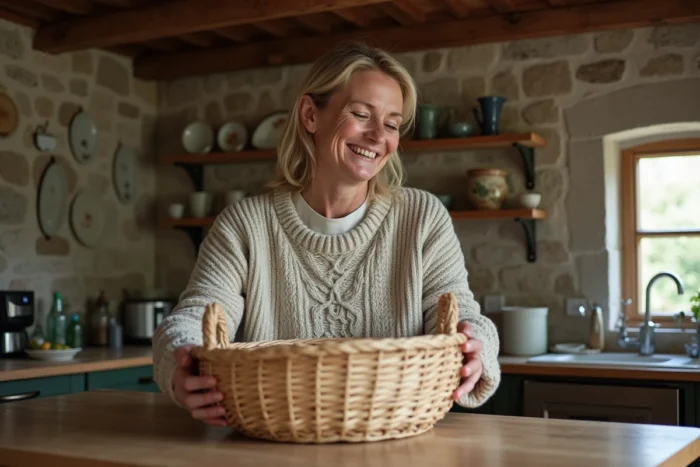
Old stones have never given in so easily: integrating modern comfort into a Breton longhouse often means opening Pandora’s box. Those who attempt the experience quickly discover that certain ultra-trendy materials accelerate the wear of century-old walls, far from the myth of the “miracle” renovation. There are also meticulous local rules: here, a forbidden shade on the shutters; there, an incompatible coating deemed “too smooth” for the landscape. Nothing is ever guaranteed, not even the color of the facade.
Others take old agricultural tools to transform a fork or a trough into unique decorative objects, far removed from standardized commercial accessories. Sometimes these are tips passed down quietly, ideas inherited from neighbors or artisans, that help find the right balance between fierce preservation and contemporary boldness.
Why does the Breton house still fascinate today?
The Breton house stands as a manifesto: it asserts an identity, solid and rooted, in every corner of the country. From longhouses stretching across the moor, discreet penty, to imposing malouinières by the sea, each form tells a unique relationship with the climate, the land, and family history. The Breton landscape has been woven through these buildings, witnesses to a way of life and a keen sense of transmission.
Natural materials forge the soul of these country houses: Guerlesquin granite, Kersanton stone, Sizun slate. Their raw textures and durability give the Breton house this quiet strength. The slate roofs, laid by hand, catch the rain and light, evoking the steel skies of the Bay of Douarnenez or the Pink Granite Coast. On the granite walls, the patina settles in, a silent witness to the passage of generations.
The strong attachment to these houses is also nourished by the view: an escape to the Pointe du Raz, a horizon over the Brest harbor. People return every summer, posing in front of the fireplace, photo after photo. Between heritage and modernity, these homes invite a rethinking of their decoration, without ever sacrificing their character.
To see how tradition and creation meet, explore the homepage of Jeune Bretagne: renovations, repurposing, respectful boldness of the past. It is this dialogue, constant and vibrant, that explains why the Brittany house still captivates today, a promise of the future, a living memory of the territory.
Playing with materials and colors: combining tradition and modernity in every room
In a Bretton house, interior decoration does not merely copy the past. It combines authentic textures with contemporary touches, never freezing the space. The granite or slate walls converse with light coatings, allowing light to enter. The exposed beams, natural or whitened, punctuate the volumes and remind us of the solidity of the structure.
In the kitchen, solid wood, Huelgoat oak, blonde ash, meets stainless steel or polished concrete. The Bretton dresser, always central, harmonizes with furniture featuring clean lines. The Quimper faience proudly displays itself, while linen and Brittany lace temper the ensemble, creating an atmosphere that is both warm and refined.
In the bedroom or bathroom, color makes an entrance: deep blue, slate gray, seaweed green, terracotta. Each room borrows from the landscapes of the coast or moors, refusing monotony. A few Breton patterns, on a wall or a textile, provide the final touch without ever weighing down the space.
Here’s how tradition and modernity combine without a false note:
- Design objects find their place next to reimagined closed beds, creating an unexpected dialogue.
- A graphic wallpaper enhances a wall, subtly recalling local patterns.
- The living room opens up to nature through large windows and curtains made of natural materials, ranging from sand to stormy blue.
The Bretton decor thus reinvents itself, room by room, playing on the richness of materials, colors, and details inspired by the region.
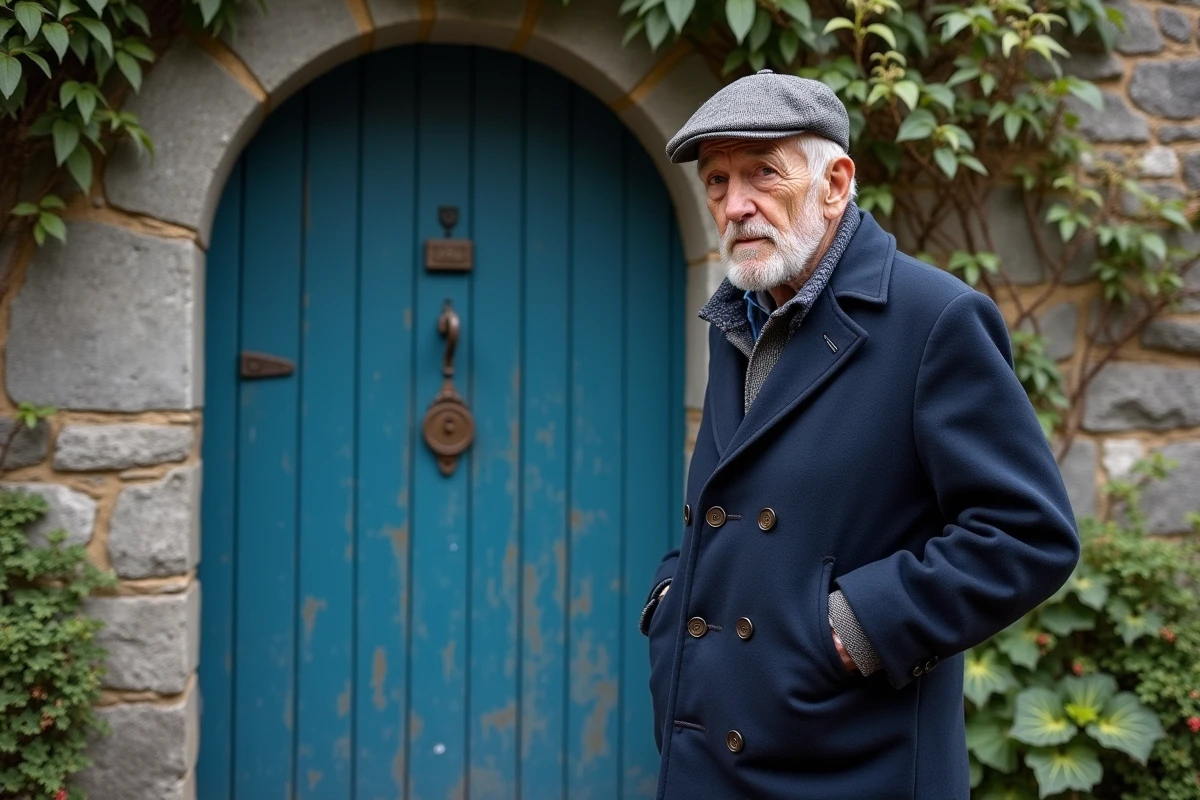
Inspiring decor tips to reveal the Breton soul in a contemporary interior
To give depth to each room, let Bretton creation in. Choosing local artisans brings immediate authenticity: ceramics from the Faïencerie de Quimper, original textiles, objects signed by Mylène Favennec Créations or Maison Aod. Each piece then becomes a reflection of a territory, far from soulless decor.
Mixing influences remains one of the keys to the modern Brittany style. The lines are simple, with deep blues and slate grays dominating, while the coastal style is expressed through a few ropes, boat lanterns, or model sailboats, scattered sparingly. A touch of Gwenn-ha-du pattern on a cushion or curtain is enough to remind of the regional identity without falling into caricature.
The Bretton garden also offers an inspiring playground: hydrangeas and camellias coexist with local vegetables on the terrace, creating continuity between the interior and exterior. At the table, a linen tablecloth and hand-decorated plates subtly evoke local roots.
To renovate without losing the thread of history, there are aids like MaPrimeRénov or Éco-PTZ. These programs allow for the mobilization of interior architects and skilled craftsmen, true bridges between tradition and contemporary creation. The Bretton soul then expresses itself powerfully, carried by the authenticity of materials and attention to detail.
Nothing replaces the patina of time, nor the pleasure of seeing a Breton house continue to surprise, generation after generation.