
The numbers don’t lie: every year, hundreds of laws are adopted, billions are committed, and debates rush forward without pause. Nothing progresses according to a linear plan. Political decisions follow one another in a climate of urgency, pushed by interests that rarely converge and elections that always seem to come too quickly. The result? Hasty measures, objectives that struggle to align. Economic growth on one side, ecological imperative on the other: the synthesis sometimes resembles an impossible equation.
The acceleration of information flow leaves no respite. Divisions are exacerbated, public opinion becomes elusive, volatile, sometimes unpredictable. Understanding what is at stake requires meticulous attention: to the facts, to the sources, to the real consequences of each collective choice.
What are the major issues shaping current events today?
Never has information circulated at such a pace. Traditional media, social networks, podcasts, influencers: each medium imposes its rhythm, its rules of the game. The boundaries blur between raw facts, opinion, and interpretation. In France and beyond, energy sovereignty is a topic in every debate. The transition to renewable energies, the strategic role of nuclear power, the place given to biomass or hydropower: these are all subjects that crystallize tensions and reveal delicate trade-offs. Public or private investors try to navigate between profitability and environmental imperatives. Meanwhile, the war in Ukraine reshuffles the cards, reminding us of the persistent dependence on Russian hydrocarbons and accelerating diversification strategies.
In this landscape, the French platform Clarity News charts a different course: clarity, methodical verification of sources, rigorous selection of topics. This choice of method makes perfect sense as information channels proliferate and misinformation takes hold. Radios, newspapers, television, but also unprecedented digital formats: diversity is a strength, provided that heightened vigilance is exercised over the reliability of what circulates.
On the international stage, the United States, China, and the European Union compete on all fronts: economy, technology, geopolitics. This clash of powers reverberates even into our national policies. The major digital platforms, for their part, reshuffle the hierarchy of news, while society seeks reliable benchmarks to understand weak signals and emerging trends.
Decoding information: how to distinguish facts, interpretations, and media manipulations
The abundance of content imposes a rigorous exercise: separating verified facts from interpretation, uncovering media manipulation. Current events, covered by a constellation of media and platforms, demand unwavering attention to the nature of sources. At a time when everything circulates, from radio news to an influencer’s Twitter feed, the boundary between rumor and documented information dangerously blurs.
Journalists rely on a foundation: the Munich Charter, which mandates verification, cross-referencing of sources, and loyalty to the public. But the temptation for speed and virality erodes rigor. Disinformation campaigns multiply during elections, around international conflicts like Iran or the Strait of Hormuz, reminding us of the necessity for a critical and informed perspective.
Fact-checking then becomes essential. A few principles emerge to help navigate:
- Always verify the origin of the data: official statement, direct testimony, independent analysis? The degree of reliability varies significantly.
- Cross-check versions, trace back to the context, reconstruct the chronology of events.
- Ensure compliance with privacy rules and GDPR.
- Question the use of artificial intelligence in the production of information.
Attention must not wane in the face of the spectacularization of current events. When emotion prevails, when images overshadow analysis, the risk of slippage increases. Decoding also means questioning media mechanisms and the role we occupy as readers in the face of the complexity of reality.
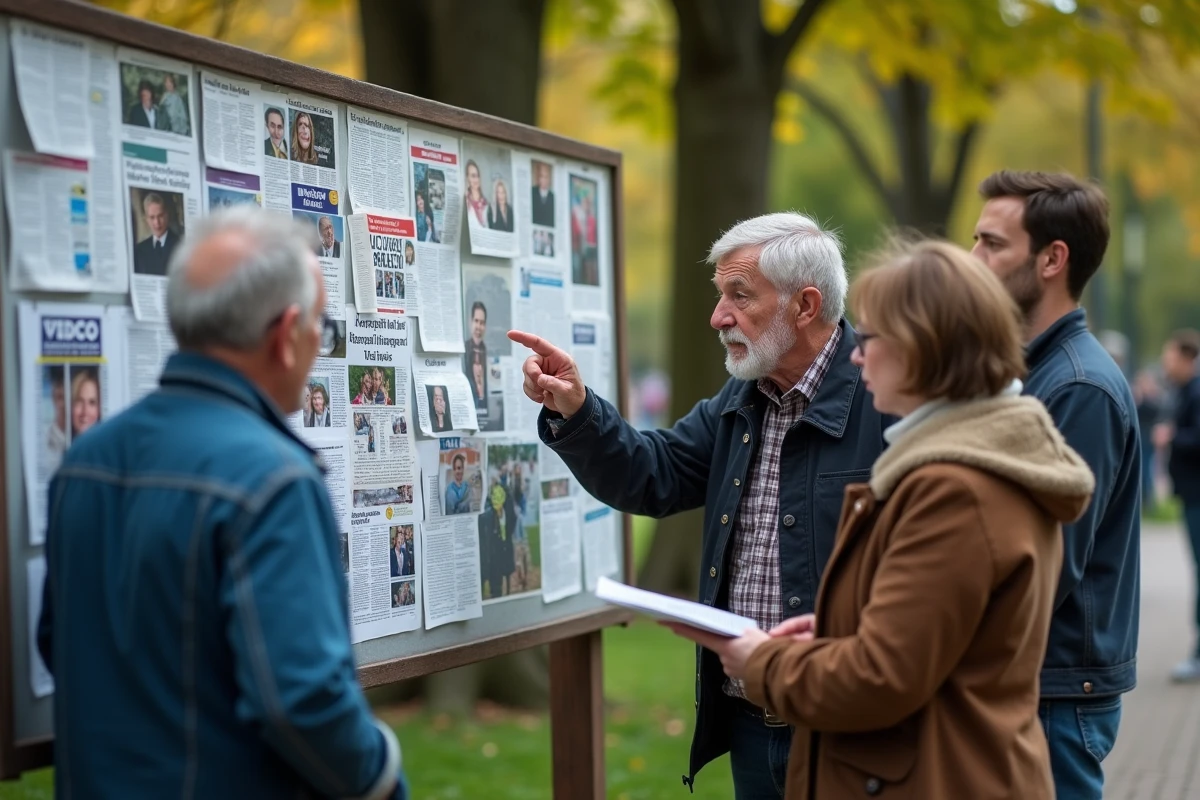
Acting as an informed citizen: why engage with the challenges of our society?
Simply reading the news is no longer enough. In the face of the challenges facing our society—energy transition, geopolitical reshaping, upheavals in work—it is no longer a matter of remaining a spectator. Engagement today takes the form of an active approach, a desire to understand and influence what shapes our daily lives. According to INSEE, 37% of French people now consult multiple sources for information: press, web, podcasts. This diversity fosters collective vigilance but calls for rigor and the ability to distinguish the essential from the trivial.
Participating as a citizen is not just about voting. It also means verifying the reliability of sources, confronting viewpoints, and striving to grasp what alters the balance of our societies. Analyses by Pierre Boc or ANACT highlight the decisive impact of media education on critical thinking. Meanwhile, Médiamétrie documents the rise of digital platforms and how they shape access to information, revealing the growing influence of social networks on our perception of the world.
To gain intellectual autonomy, certain benchmarks prove valuable:
- Read works on geopolitics, whether by Pascal Boniface or Sébastien Abis, to place current events in a broader context;
- Consult reports from organizations such as the Foundation for Strategic Research or the Jacques Delors Institute;
- Question the insights of experts, whether they come from the corporate world or academia.
Information circulates quickly, but it is up to each individual to remain in control of their journey, their analyses, their convictions. The times demand, more than ever, to keep a cool head in the flow and to chart one’s own path, clear-sighted and engaged.