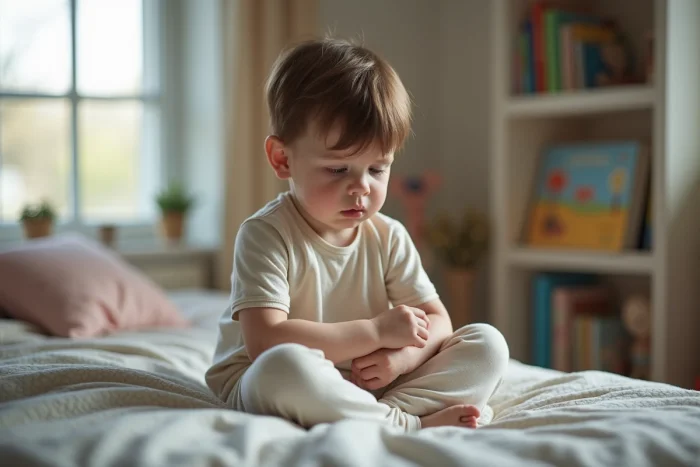
Hard to ignore: a child with chickenpox does not return to school until their spots have dried and crusted, and this is clearly stated by the Ministry of Health. In practice, things get complicated. As soon as a facility accepts a child in the healing phase, tensions rise between parents and the school. Each side seeks its truth in the maze of rules, often interpreted differently from one illness to another, between medical recommendations and on-the-ground realities.
Communicable diseases at school: between vigilance and organization
Alert as soon as the first spots appear: the question of chickenpox and school attendance shakes all certainties. As soon as a sick student crosses the threshold of the classroom, the balance is disrupted: contagion is on everyone’s mind. In the face of this risk, school exclusion becomes necessary, rarely with good grace, but in the interest of the collective.
Each infectious disease has its own guidelines, varying according to severity. For bacterial meningitis, measles, or tuberculosis, the rule is simple and unequivocal: immediate exclusion prevails, procedures are initiated, and information circulates quickly to cut short the spread. With chickenpox, it’s more nuanced: the attending physician decides, based on the progression, no more fever, well-formed crusts, before allowing a return. Sometimes, a simple glance from the healthcare professional is enough to settle the debate.
To navigate this maze of guidelines, we can distinguish a few main exclusion rules according to the disease:
- After a gastroenteritis, scarlet fever, whooping cough, or measles, returning to school is only possible when the most intense symptoms have disappeared.
- For chickenpox, bronchiolitis, or influenza, the green light comes when the fever is gone and all lesions are dry.
- For infections such as mumps, conjunctivitis, or otitis, medical advice is necessary, as it all depends on the child’s actual condition and current contagiousness.
When several children fall ill simultaneously, the Regional Health Agency intervenes: enhanced communication with families, written guidelines, and precise monitoring of the infection cluster. For conditions under specific surveillance, it is up to the doctor to decide when to return, sometimes requiring a certificate, or even a gradual return under supervision.
Detecting signs and deciding: when to keep your child at home?
Some signals act as a wake-up call: if the child is sinking into fatigue, if the fever persists, or if the rashes remain moist, home becomes the unavoidable refuge. It is no longer about accommodating comfort, but about halting the contamination that threatens the community. As long as there is a temperature or new spots, returning to class is prohibited, even at the cost of a headache for parents.
Here are the specific circumstances in which keeping your child at home remains the best decision:
- During the first two days of antibiotic treatment for a strep throat or scarlet fever, the child must rest.
- After a measles rash, one must wait five days before considering a return to school; for whooping cough, the countdown begins with treatment.
- In the case of an infection monitored by public health, the duration of exclusion is at the discretion of the doctor, sometimes requiring a medical certificate.
Practical advice for families
Some guidelines facilitate decision-making in everyday reality:
- A persistent fever or a level of fatigue incompatible with classroom life are clear signals: no school.
- In the face of serious conditions like meningitis, hepatitis A, diphtheria, or tuberculosis, the instruction remains unchanged: immediate isolation and urgent medical consultation.
- Ongoing antibiotic treatment requires strict adherence to the indicated number of days before any return to the community.
- After chickenpox, bronchiolitis, or influenza, return is only discussed when the child is well, validated if necessary by the doctor if doubts persist.
At the height of the illness, the risk of transmission remains maximal. In case of doubt, dialogue with the doctor or consulting information from the Regional Health Agency guides the decision, in the interest of the whole class.

Preparing for and living through school exclusion: organization, adaptation, serenity
Deciding to keep your child at home means giving them the necessary time to heal away from pressure, but also avoiding any relapse or transmission to others. For chickenpox, this is non-negotiable: as long as there is any fever or the slightest active spot, the order remains absence. While waiting for the green light, the daily rhythm adapts: quiet time, light activities, and close monitoring replace school days.
To best manage this enforced absence, sick child leave offers a concrete solution: three days of authorization per year (five for large families). If the establishment opposes the attendance of a child deemed potentially contagious, the online declaration at declare.ameli.fr allows for easy regularization of the administrative situation.
The adult surroundings must prioritize caution: wearing a mask is recommended for a sick child welcomed in a community setting. At home, this rule is relaxed, but informing concerned families in advance, especially if a fragile child attends the facility, limits misunderstandings.
Antibiotics do not act on chickenpox: only careful monitoring of the general condition matters, along with medical consultation at the slightest sign of concern. Preventing rather than curing also involves vaccination, a safeguard against severe forms. Adhering to medical advice gives the best chance of reintegrating into school smoothly.
From these delicate episodes often emerge a new solidarity, vigilance reflexes, and more open dialogue between families and schools. Then, when the child finally returns to their class, the entire community enjoys this return to a shared rhythm.