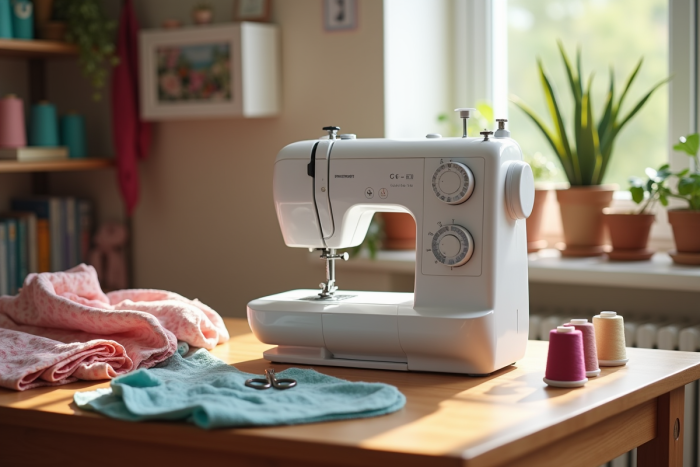
Starting to sew at home may seem daunting, but with an accessible machine, it’s simpler than you think. You just need to choose a model suitable for beginners, equipped with basic features and easy to handle. A user-friendly machine allows you to focus on learning fundamental techniques without getting lost in complex settings.
To get off to a good start, you need to equip yourself with the right accessories: needles of various sizes, sewing scissors, pins, and quality threads. By taking the time to practice with simple projects, you gradually gain the confidence needed to create more ambitious pieces.
Choosing and Preparing Your Sewing Machine
To start sewing, choosing the right sewing machine is crucial. An accessible sewing machine suitable for beginners is key to avoiding frustration and premature abandonment. Among the recommended models, the Lidl sewing machine is often mentioned for its value for money. Before you begin, it is essential to carefully read the user manual for the Lidl sewing machine to fully understand its operation and basic settings.
Essential Tools
To properly prepare your sewing machine, a few tools are necessary:
- Needles: of various sizes to adapt to different fabrics.
- Sewing threads: of good quality to avoid frequent breakages.
- Sewing scissors: for a clean and precise cut of fabrics.
- Pins and pin cushion: to hold fabric pieces in place.
- Measuring tape: for accurate measurements.
Choosing Your Fabrics
For your first projects, prioritize fabrics that are easy to work with:
- Cotton: ideal for beginners due to its stability and ease of handling.
- Cotton poplin: slightly stiffer, perfect for structured pieces.
- Chambray: light and flexible, it is well-suited for summer garments.
- Cotton canvas: sturdy, ideal for projects like bags or cushions.
- Mixed linen: for a natural and elegant finish.
- Felt or wool: for creative and decorative projects.
- Viscose: fluid and soft, but requires a bit more experience.
These tools and materials will help you get started and progress quickly in sewing.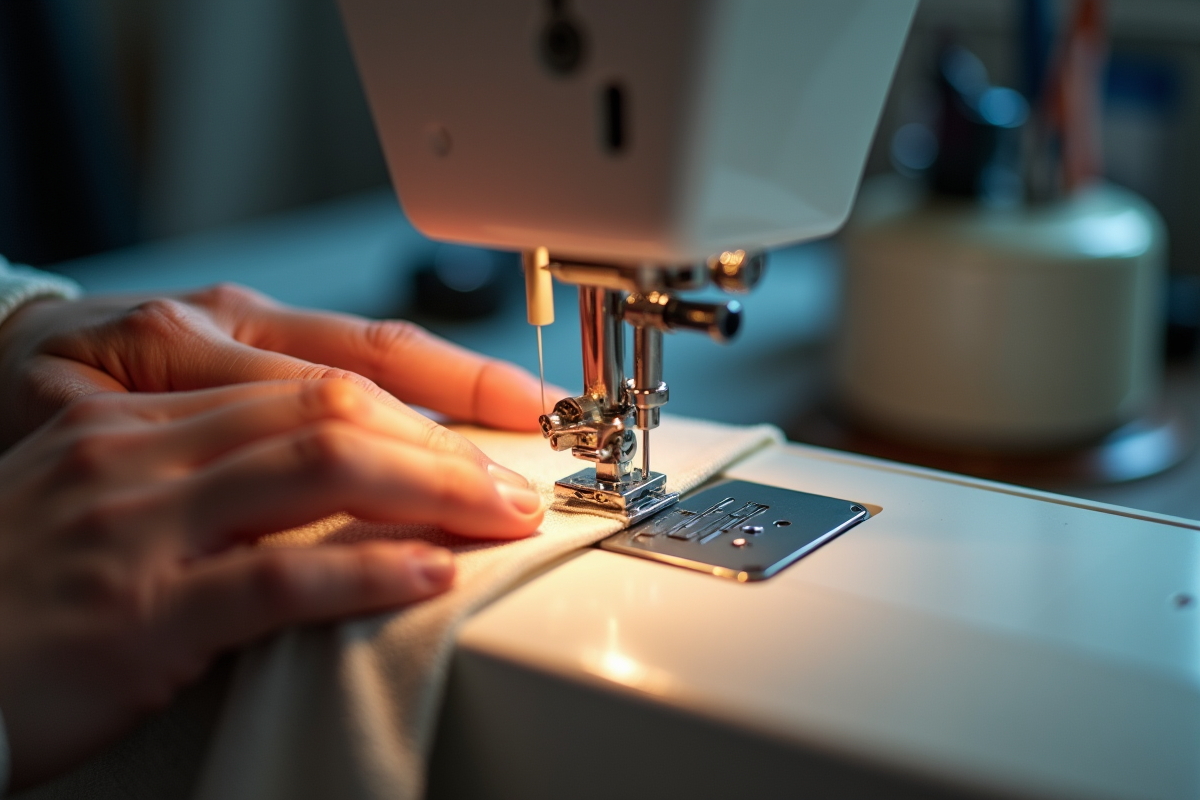
Completing Your First Sewing Projects
To get off to a good start, begin with simple projects. The straight stitch, basic yet essential, is the first stitch to master. To reinforce seams, learn the backstitch. The hem stitch and basting stitch complement these basic techniques, ensuring clean and sturdy finishes.
Simple and Accessible Projects
For your first projects, choose practical and rewarding creations:
- Cushions: an excellent exercise to get used to handling fabric and maintaining consistent stitches.
- Fabric bags: simple and useful, they allow you to work on different sewing techniques.
- Pant hems: perfect for learning the hem stitch and giving a second life to your clothes.
Exploring New Ideas
Once you’ve mastered the basics, broaden your horizons with more complex projects:
- Gathered panties and shorts: to explore garment sewing and work with stretchy fabrics.
- Vanity case: ideal for practicing straight seams and zippers.
- Detachable collar: to add a personal and unique touch to your outfits.
These initial projects will help you develop your skills and gain confidence. The diversity of possible creations in sewing is immense, offering an endless array of creative possibilities.