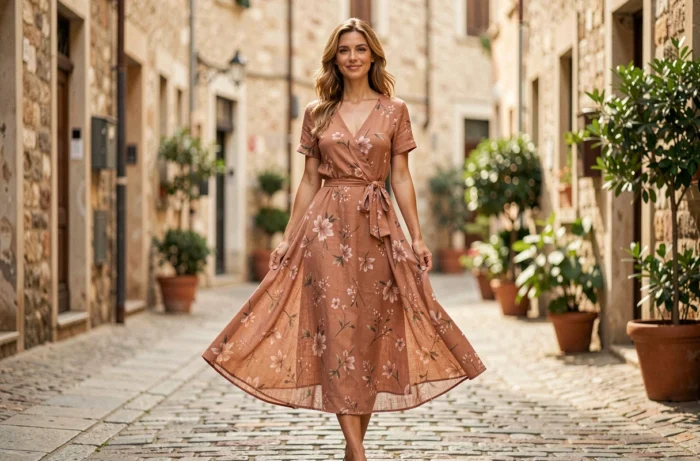
Each new season reignites the question of the wardrobe, and the dress remains the piece that crystallizes the most visible changes. The autumn 2026 collections mark a clear turning point: bold volumes, vibrant colors, and materials with strong personality. Adopting the trendy dresses of the season is not just about following a list of models. The choice relies on understanding the silhouettes, fabrics, and how a dress fits into a complete look.
Volumes and silhouettes of autumn 2026 dresses: what really changes
Have you noticed that cuts have widened in recent seasons? Autumn 2026 takes this logic further. The runways showcased very pronounced volumes, far from the fluid and demure dress that dominated until recently.
Two directions coexist. On one side, structured dresses with defined shoulders and structured skirts. On the other, fitted models inspired by vintage, which shape the silhouette without compressing it. This contrast is one of the distinctive features of the season, highlighted by Vogue in its analysis of autumn 2026 dress trends published on September 2, 2026.
In concrete terms, this means that a straight midi dress and a balloon-sleeve dress are both in tune with the season. The criterion for choice is no longer length, but the relationship between the volume of the top and that of the bottom. A loose dress on top calls for a more fitted bottom, and vice versa.
To explore these varied silhouettes, Bla Bla Bla dresses offer a range of cuts that well reflect this duality between structure and fluidity.
Color palette and prints: natural tones dominate the season’s dresses
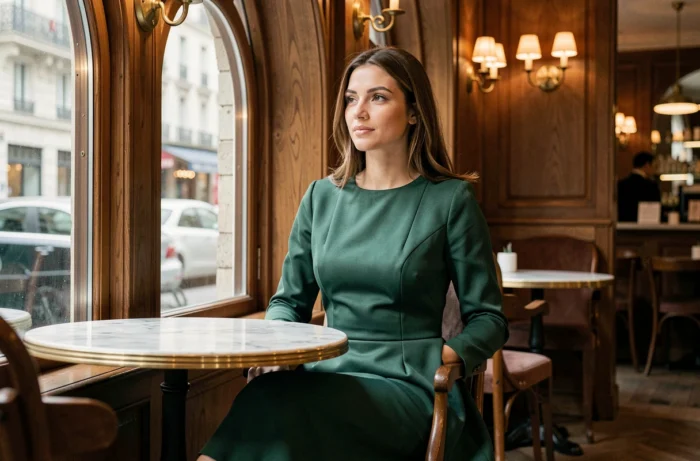
The colors of the season tell a specific story. The autumn 2026 palette leans towards a direct relationship with nature: earthy tones, deep ochres, moss greens, warm browns. Visual references to natural landscapes run through the collections like a common thread, according to the analysis of the autumn 2026 runways published by Vogue on September 8, 2026.
This is not a return to dull beige. The shades are saturated, almost earthy in the mineral sense of the term. A clay-colored or dark burgundy dress carries the look more than a flashy accessory.
Bold prints versus deep solids
On the print side, two approaches stand out:
- Bold prints, often geometric or large-scale, which work better on simple cuts to avoid visual overload.
- Deep solids (burgundy, forest green, midnight blue), which allow for playing with textures and layering without weighing down the outfit.
- Romantic patterns, floral designs revisited in dark tones, which add character to a midi or long dress without falling into the spring-like category.
Choosing between print and solid depends on the rest of the outfit. A strong print stands on its own: no need for bold jewelry or a patterned jacket on top. A deep solid, on the other hand, easily supports a textured scarf or a contrasting coat.
Fabrics of trendy dresses: why the fabric matters as much as the cut
The cut catches the eye, but it is the fabric that determines the drape, comfort, and durability of the dress. The autumn 2026 collections highlight fabrics with strong personality, far from smooth and anonymous polyester.
Romantic materials are making a strong comeback: corduroy, thick knits, blended wool, lined chiffon. These are not decorative choices. A velvet dress falls differently than a jersey dress. It captures light differently, moves differently, ages differently.
For mid-season, a sufficiently dense knit avoids piling on layers. A blended wool dress worn with ankle boots and a light trench covers most October days without needing an extra sweater.
How to assess the quality of a fabric
Why does this point deserve attention? Because two dresses with the same cut can yield very different results depending on the fabric. Here are some concrete guidelines:
- Crinkle a corner of the fabric in your hand and release. If it retains the mark, it will wrinkle all day.
- Look at the lining. A dress without lining in a fine fabric will mark every crease of the body, especially in direct light.
- Check the density of the knit. A knit that is too loose will deform at the elbows and hips after a few wears.
- Read the composition. A blend with at least some natural fiber (wool, cotton, linen) breathes better than a 100% synthetic.
Textile regulation in Europe: what it changes for your dress purchases
The European regulation is gradually changing the textile offer available. The European regulation on the eco-design of sustainable products now prohibits the destruction of unsold goods for large companies in the textile sector (clothing, accessories, shoes). According to Mason Hayes & Curran, this ban will extend to medium-sized companies by 2030, with some exceptions related to safety or product condition.
For consumers, this means that floor prices will gradually rise in certain segments. Investing in a better-quality dress today anticipates a market evolution that will make disposable pieces less accessible and less acceptable.
Creating a complete look around a seasonal dress
A dress does not work in isolation. The autumn 2026 style relies on layering, what English speakers call layering. The dress becomes a base on which to build.
A thick knit midi dress can be worn with an oversized blazer and low-heeled ankle boots for an office look. The same dress with a leather jacket and sneakers completely changes the vibe for the weekend. The versatility of a dress is measured by the number of different outfits it allows.
For the summer-to-autumn transition, simply adding opaque tights and a long cardigan is enough to extend a light dress for several weeks. The trench remains the most effective layering piece with a long dress because it structures the silhouette without crushing the volume of the garment underneath.
The fashion trends of the season value thoughtful choices over impulsive purchases. A well-cut dress, in a solid fabric and a color that transcends the seasons, will serve well beyond autumn 2026.