
The A31 motorway connects Beaune to the Luxembourg border, crossing Lorraine over more than 200 kilometers. This route experiences particularly dense traffic between Metz and Luxembourg, where the flows of cross-border workers overlap with the transport of goods. Accidents that occur here cause chain disruptions, mobilize significant rescue resources, and raise questions about the operational management of a saturated infrastructure.
Rear-end collisions on the A31: a recurring accident mechanism
The majority of recent accidents on the A31 in Moselle fall under a specific type: rear-end collision. This term refers to a crash between a vehicle and the one in front of it, usually during a sudden slowdown. The ONISR, in its report on road accidents for the Grand Est territories published on April 29, 2024, notes a significant increase in this type of collision, particularly on the Richemont-Metz and Metz-Luxembourg sections.
This phenomenon can be explained by the configuration of the route. Between Thionville and the border, traffic alternates between smooth phases and sudden congestion. A vehicle stopped on the emergency lane, a breakdown, or a simple chain braking is enough to cause a pile-up. The accident that occurred in Richemont, involving six vehicles with three lightly injured individuals evacuated, illustrates this scenario. In Talange, a collision between two vehicles was enough to block traffic towards Metz for several hours.
A detailed report on the latest accidents on the A31 motorway confirms that collisions with vehicles parked on the emergency lane constitute an increasing share of the incidents recorded on this route.
Rescue operations on the A31: the “yellow men” patrols on the front line
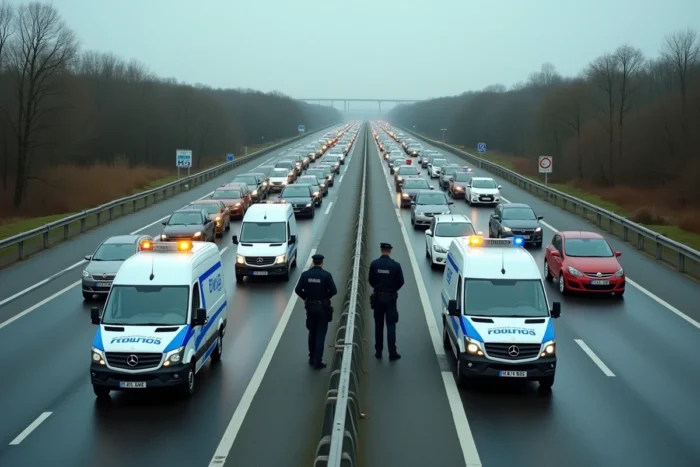
When an accident occurs on the A31, the intervention chain calls upon several actors simultaneously: firefighters from the SDIS, SAMU, law enforcement, and agents from DIR Est. Since the end of 2024, DIR Est and the Moselle Prefecture have intensified the presence of “yellow men” patrols between Metz and the Luxembourg border during peak morning and evening hours.
According to a report by RTL Infos broadcast on January 21, 2025, some teams now carry out up to several dozen interventions per day on this single route. These agents ensure the marking of the accident area, secure the lanes, and manage traffic diversion while waiting for medical assistance to arrive.
Coordination between law enforcement and DIR Est
The Moselle Prefecture systematically publishes traffic alerts during an accident on the A31. On April 8, 2025, a prefectural announcement reported an accident involving two vehicles that required the temporary closure of a lane. This type of communication aims to redirect users to alternative routes, but the lack of an effective bypass route between Metz and Thionville significantly limits the impact of these recommendations.
Gendarmes also intervene in a preventive capacity. Significant deployments have been organized on the A31 to combat dangerous behaviors, speeding, and non-compliance with safety distances, which are direct factors in rear-end collisions.
Fatal accidents on the A31: the recent human toll
Accidents on the A31 are not limited to material collisions. A fatal accident occurred near Woippy, resulting in the deaths of two men. The autopsy of the bodies was scheduled for Friday, May 15, 2026, according to the Républicain Lorrain. Authorities have launched a call for witnesses to reconstruct the circumstances of this tragedy.
The number of bodily injury accidents on the A31 in Moselle has been continuously increasing since 2022, while overall traffic remains stagnant or only increases slightly. This trend, documented by the ONISR, indicates a structural problem that goes beyond the simple increase in traffic volume.
- Rear-end collisions represent the most frequent type of accident between Richemont and the Luxembourg border.
- Collisions with parked vehicles on the emergency lane are increasing, endangering stranded motorists and intervention agents.
- The most accident-prone time slots correspond to the morning (6 AM – 9 AM) and evening (4 PM – 7 PM) commuter flows towards Luxembourg.
Construction and ramp closures: an aggravating factor for traffic on the A31
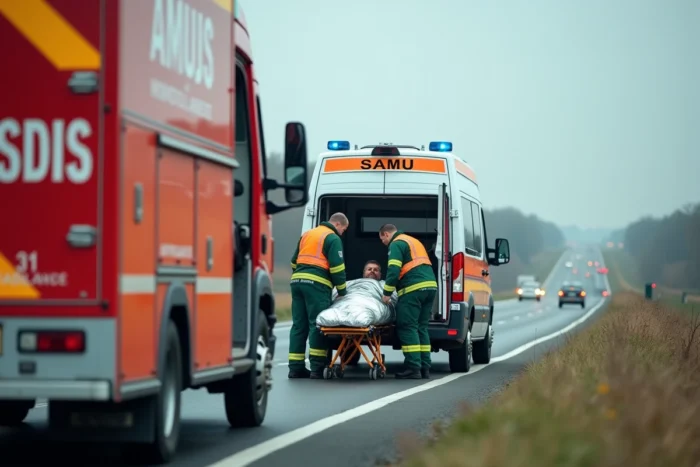
Accidents are not the only factor causing disruptions. Scheduled construction work on the A31 regularly reduces the capacity of the route, mechanically increasing the risk of incidents. In May 2026, ramp closures in Moulins-lès-Metz were announced, along with disrupted nighttime traffic for three weeks between Toul and Nancy. Construction on the bridge near Lesménils has also impacted access to the motorway.
When a construction site reduces the number of available lanes and an accident occurs simultaneously, congestion becomes total. Users find themselves in queues that can last for several hours, with no possibility of an intermediate exit.
Dynamic speed regulation: still limited results
DIR Est has implemented a dynamic speed regulation system between Thionville and the Luxembourg border, controlled by an algorithm that adjusts the speed limits displayed on variable message signs based on real-time traffic. The assessment of this system shows positive effects: a reduction in congestion, decreased travel time from Richemont to the border, and improved driving conditions in the Thionville-Luxembourg direction.
However, compliance with the prescribed speeds remains too low according to DIR Est itself. A technically reliable system only produces its effects if users comply with it, which is not yet sufficiently the case.
Road safety on the A31: a regional issue raised to the institutional level
The Grand Est Regional Council has integrated the issue of the A31 into its recent work. A resolution from February 15, 2025, explicitly mentions the “rescue” dimension related to this route, indicating that the subject goes beyond simple local observation to become a regional policy issue.
The increasing accident rate on the A31 raises a fundamental question: can a route designed for traffic well below what it currently supports be made safer through regulation alone, or does its infrastructure need to be rethought? Successive assessments from the ONISR and DIR Est provide data, but the answer depends on investment decisions that are slow to materialize.